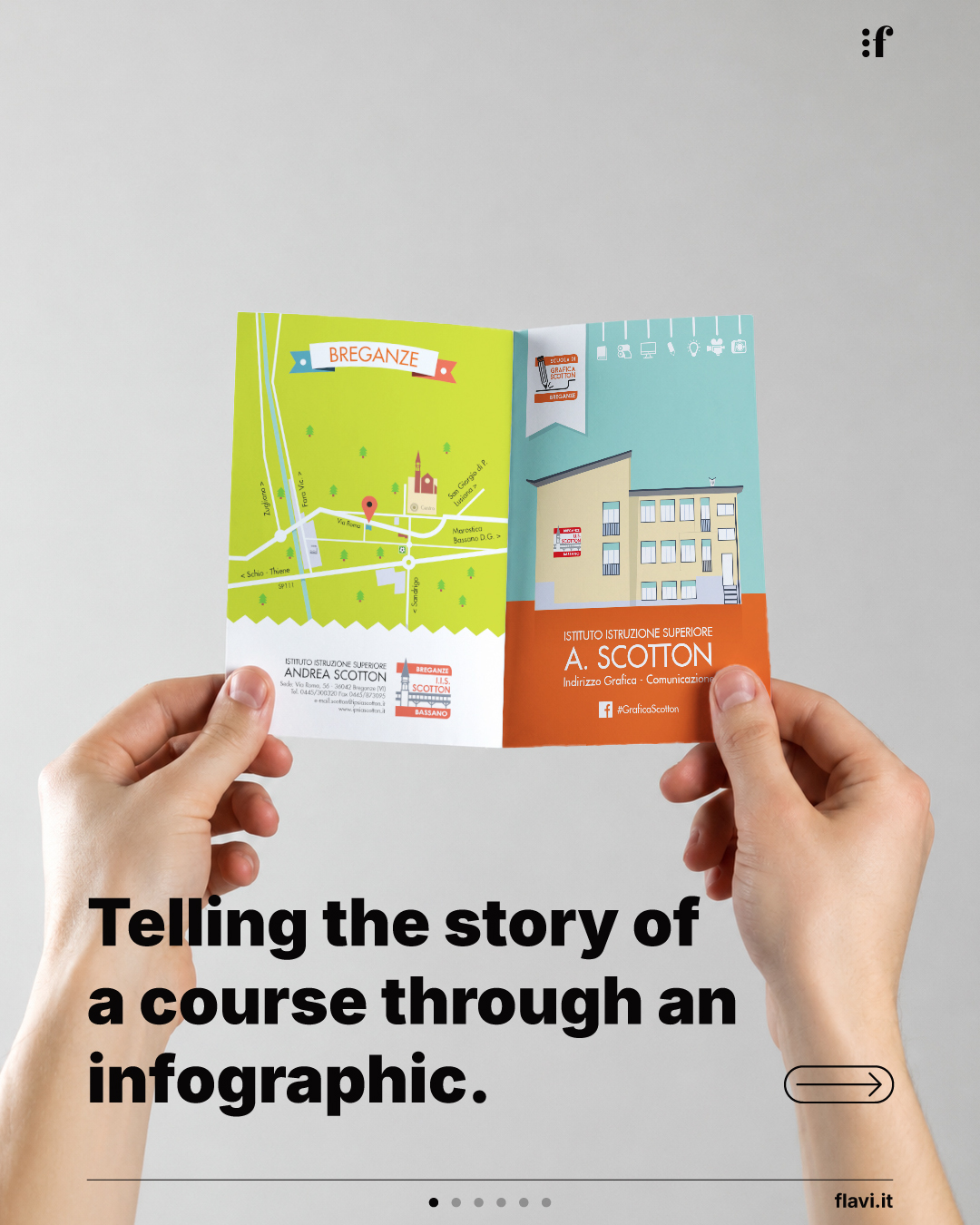
In 2015, during my final year at IIS Andrea Scotton in Breganze, I was given a project unlike any I had worked on before.
The school needed a new brochure to present the Graphics and Communication course during its Open Days, and I was given the opportunity to develop it from start to finish.
The teachers supported me by helping gather the necessary information, while the entire design and illustration process was developed independently.
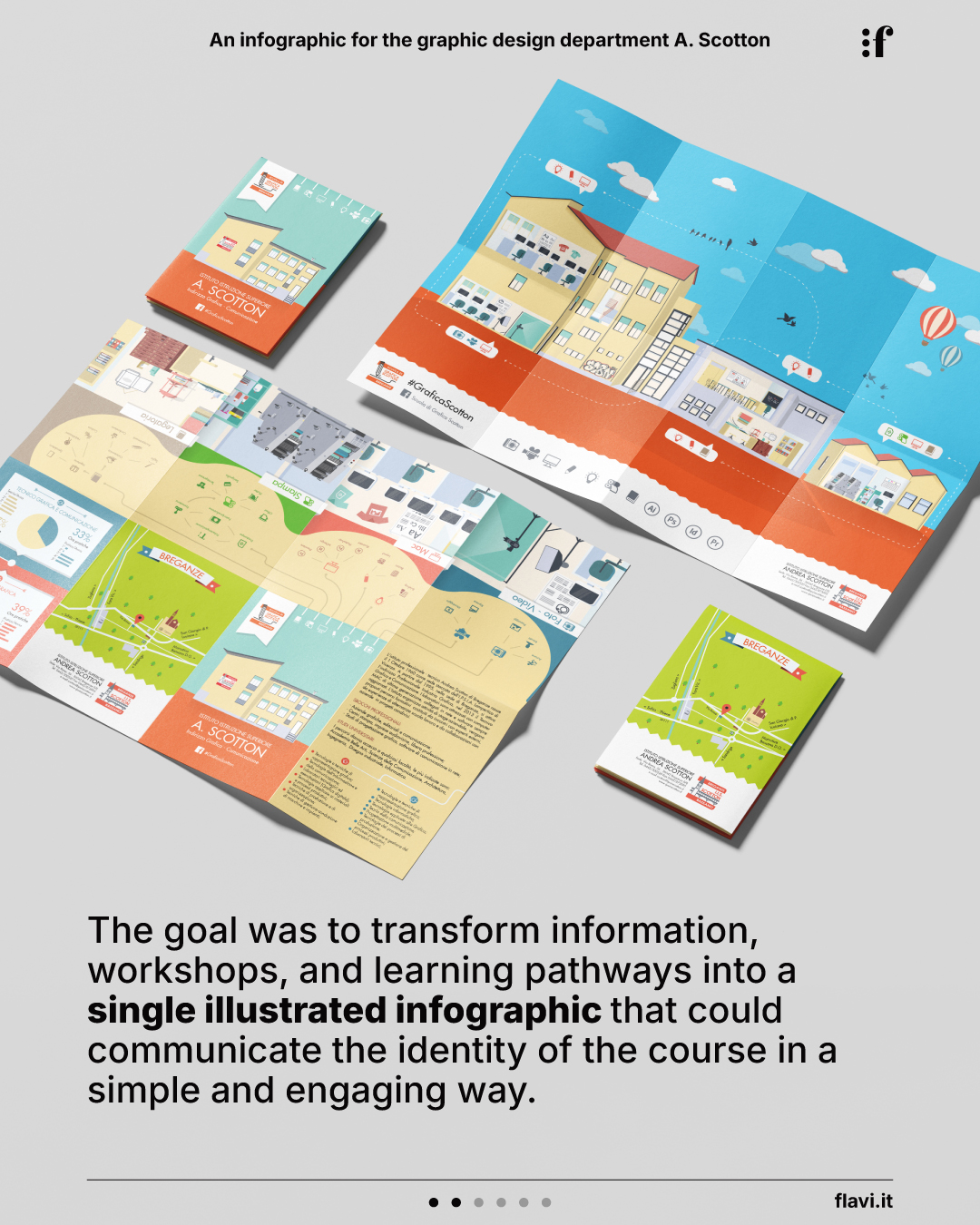
A brochure that truly represented the course
The idea was to move away from the typical brochure filled with photographs and text.
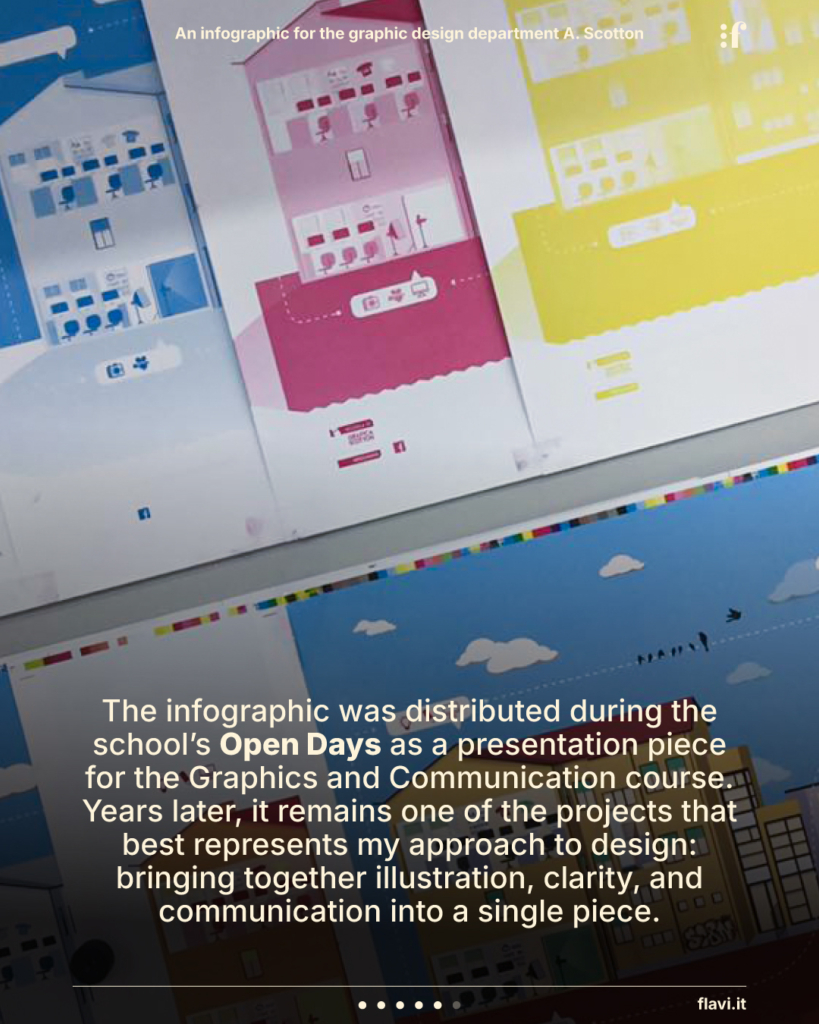
Instead, I chose to illustrate the school’s spaces and create a single visual composition that would allow anyone to understand, at a glance, what students learned and how the workshops were organized.
Each room represented a different part of the educational journey: graphic design, photography, video production, printing, and bookbinding. Around the illustration, I organized information about the course, career opportunities, the study program, and even a small map showing how to reach the school.
The objective was simple: present a large amount of information in a way that was clear, engaging, and easy to navigate without sacrificing detail.
A project built by observing real spaces
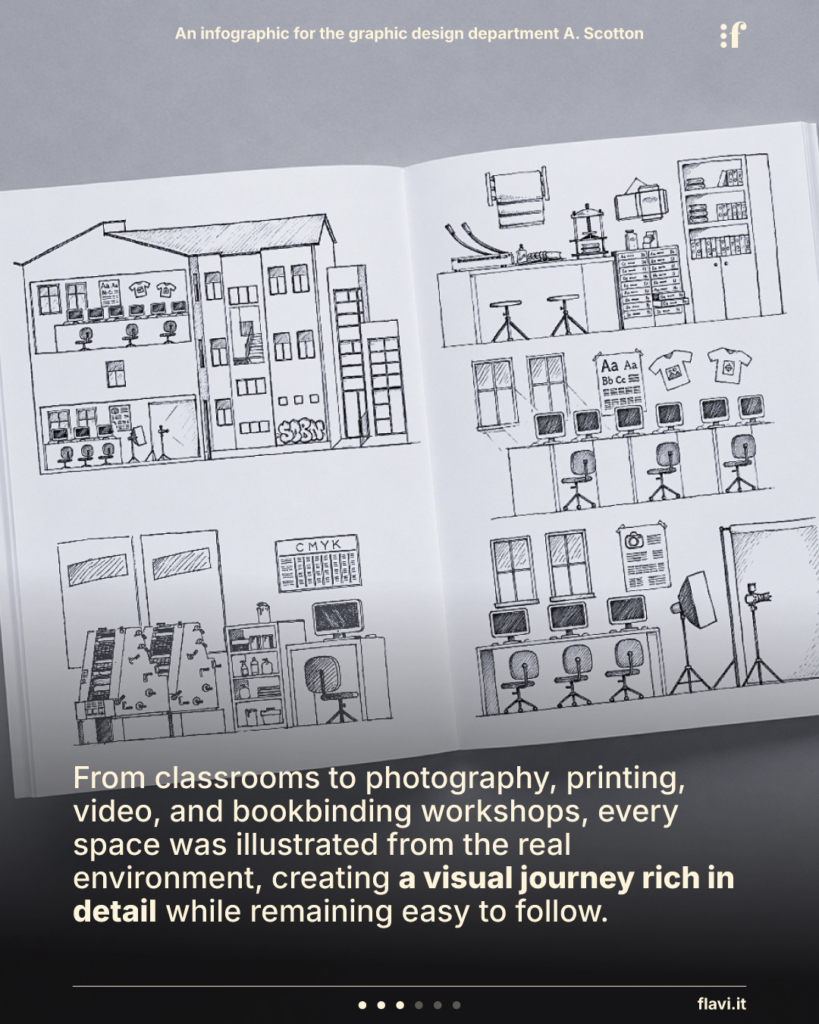
Nothing in the illustrations was invented.
I started from the actual classrooms and workshops, simplifying them while preserving the elements that made each space immediately recognizable. The printing presses, the Mac workstations, the photography studio, the bookbinding workshop—every environment was redrawn while keeping the details that defined it.
Looking back, this is probably the part of the project I still feel most connected to.
Offset printing
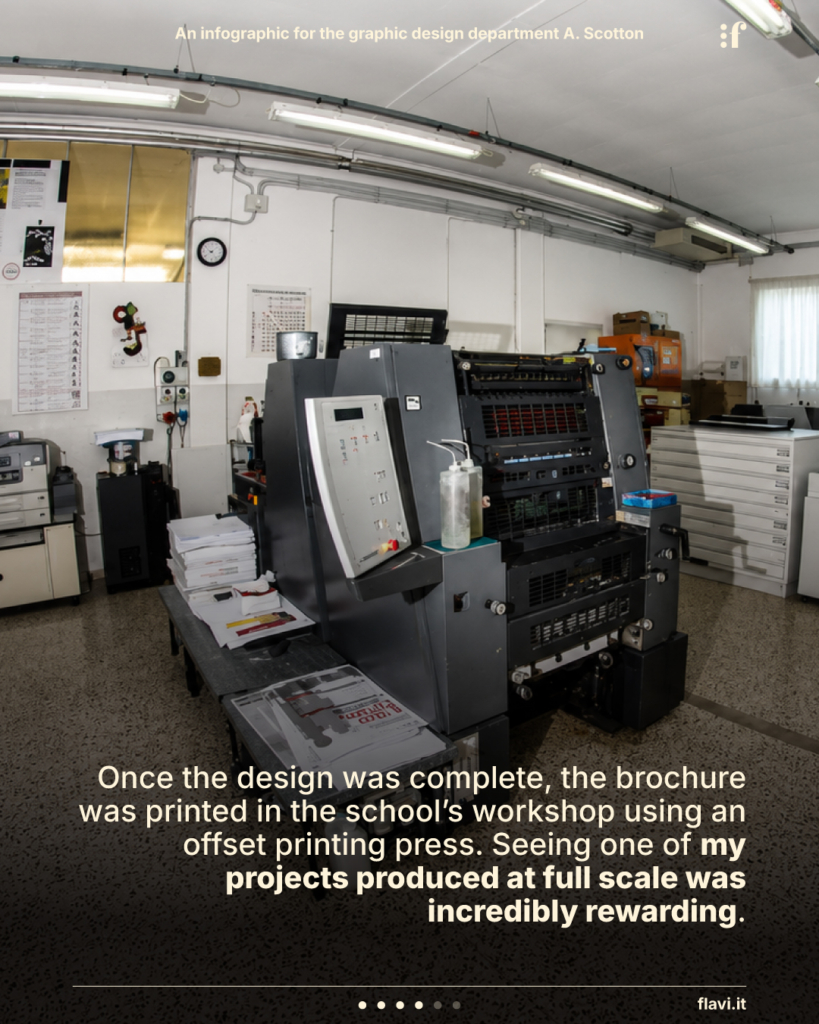
Once the design was finished, it was time for the part I had been looking forward to the most.
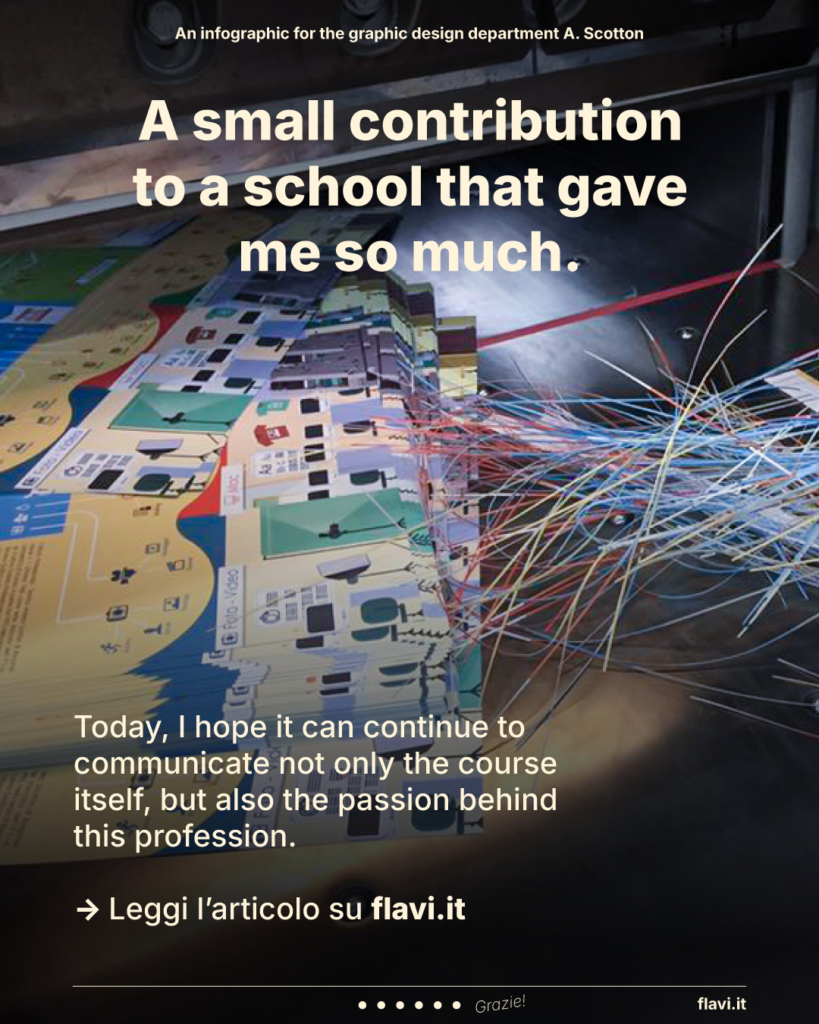
The brochure was printed in the school’s offset printing workshop.
For us as students, that was far from ordinary. Running an offset press requires time, materials, and significant production costs, so it was reserved for projects considered worthy of being produced that way.
Watching the first printed sheets come out of the press was incredibly rewarding. For the first time, one of my projects had moved beyond the screen and become something tangible.
Several years later
The brochure was distributed during the school’s Open Days and used to introduce the Graphics and Communication course to prospective students.
Today, many years later, I don’t look back on it with nostalgia.
I look back because it reflects a way of designing that, ultimately, hasn’t changed: observing, simplifying, and finding the clearest way to communicate an idea.
If there’s one thing that still makes me happy, it’s knowing that I was able to leave a small contribution to a school that gave me so much.
And who knows—perhaps that brochure ended up in the hands of someone who decided to enroll in Graphics and Communication because of those very pages.