

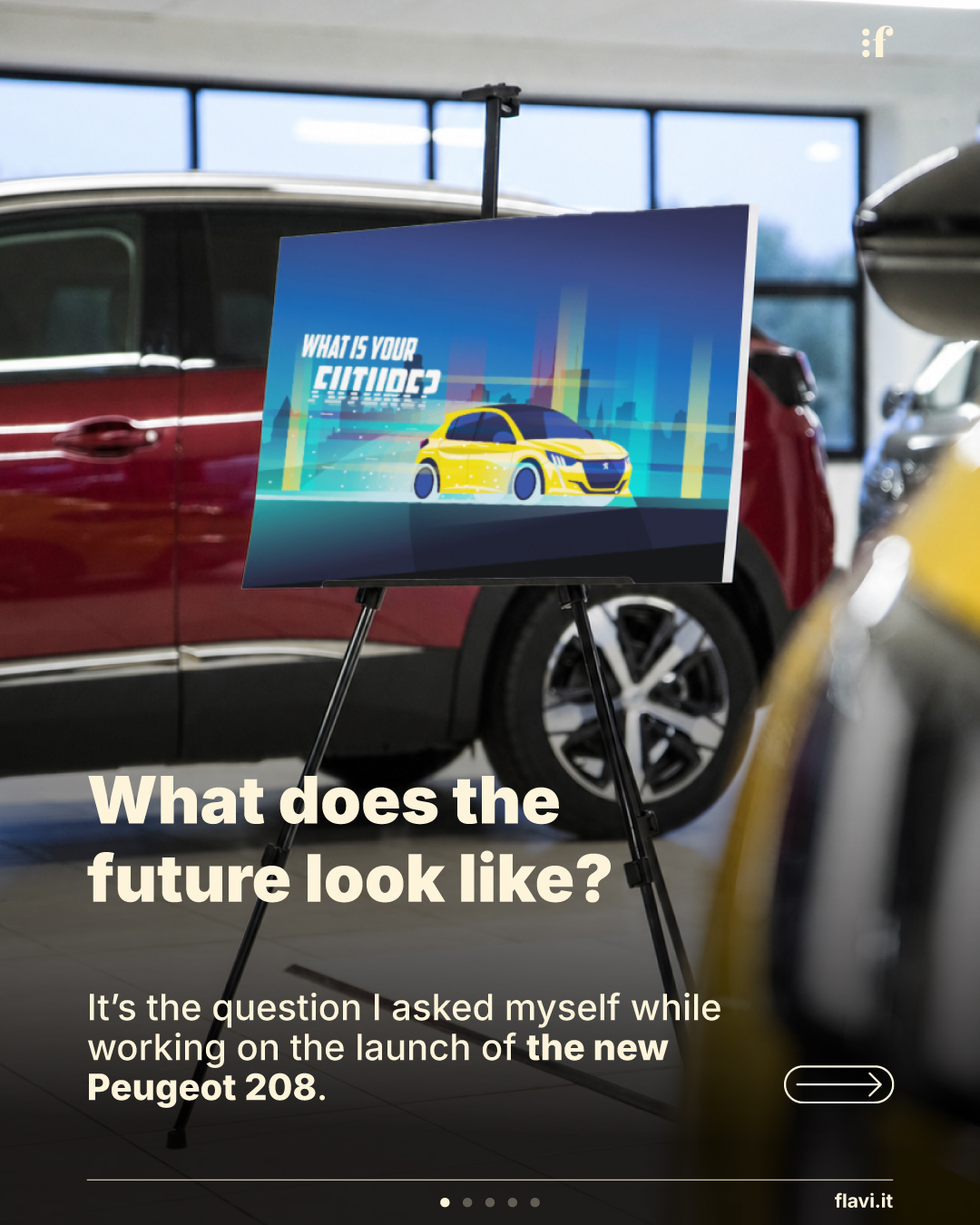
Ma che forma ha il futuro?
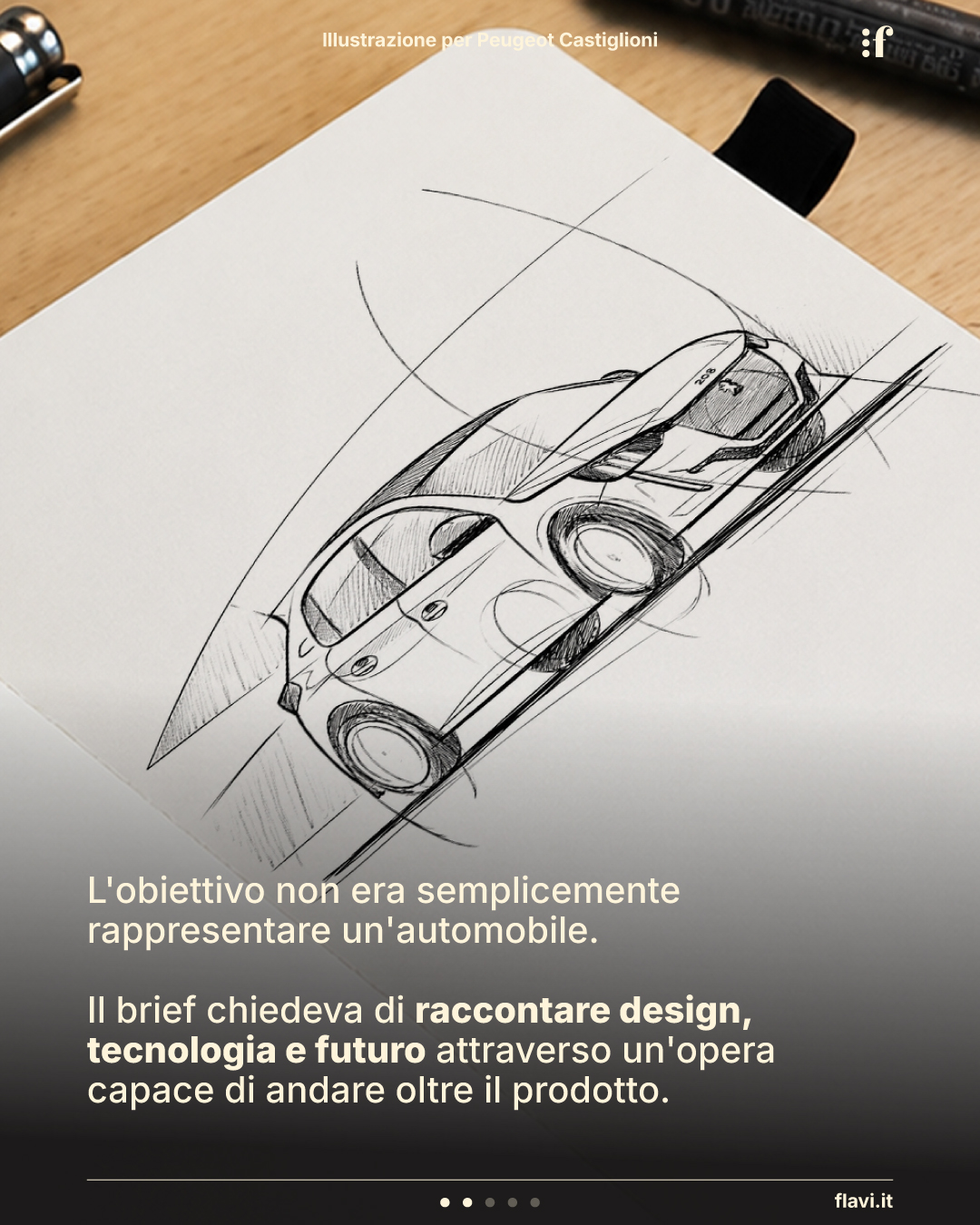
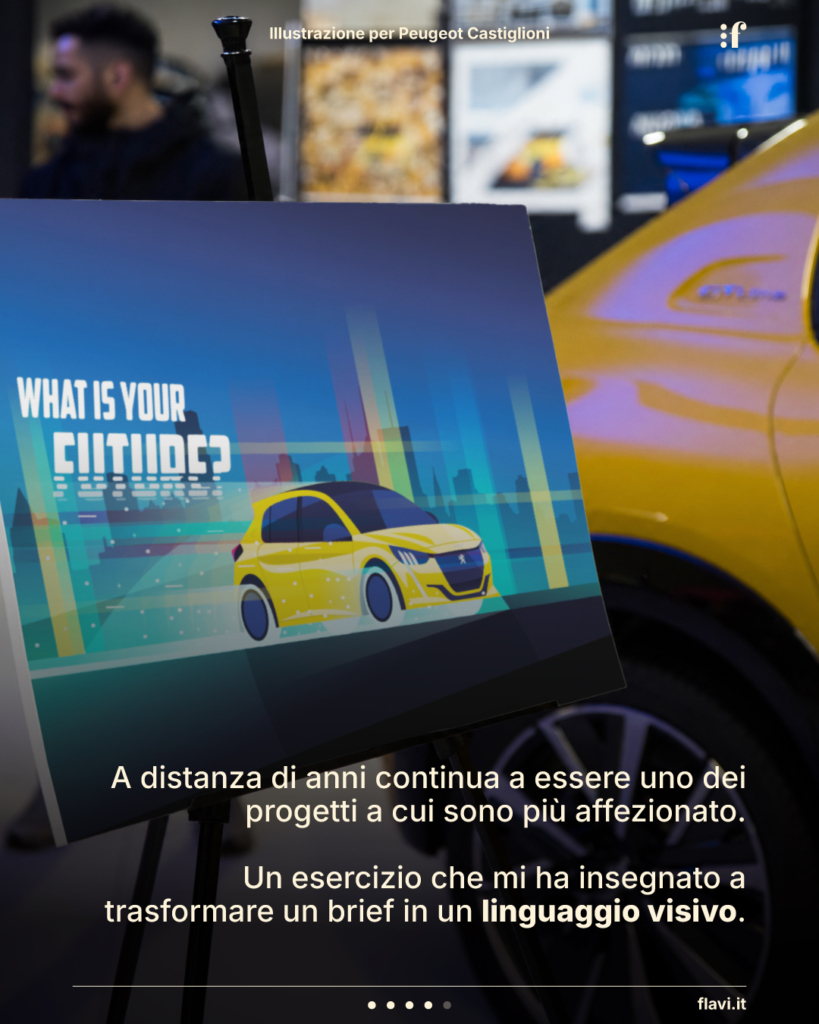
Nel 2019 ho realizzato questa illustrazione in occasione di un contest promosso da Teelent per la concessionaria Peugeot Castiglioni di Varese.
Teelent è una piattaforma italiana nata per mettere in contatto aziende e creativi attraverso contest progettuali: un brand pubblica un brief, la community sviluppa proposte e una giuria seleziona quelle più convincenti. Un modo interessante per confrontarsi con richieste reali e misurarsi con un tema di comunicazione concreto.
In quel caso il brief accompagnava il lancio della nuova Peugeot 208. Il concept ruotava attorno al claim “What is your future?” e chiedeva ai partecipanti di trasformare l’automobile in un’opera capace di raccontarne il design, la tecnologia e l’idea di futuro, lasciando totale libertà nella tecnica espressiva.
La mia interpretazione
La domanda che mi sono posto è stata semplice: che forma ha il futuro?
Non volevo rappresentare un futuro fantascientifico fatto di robot o città impossibili. Mi interessava trasmettere una sensazione più che descrivere un’epoca.
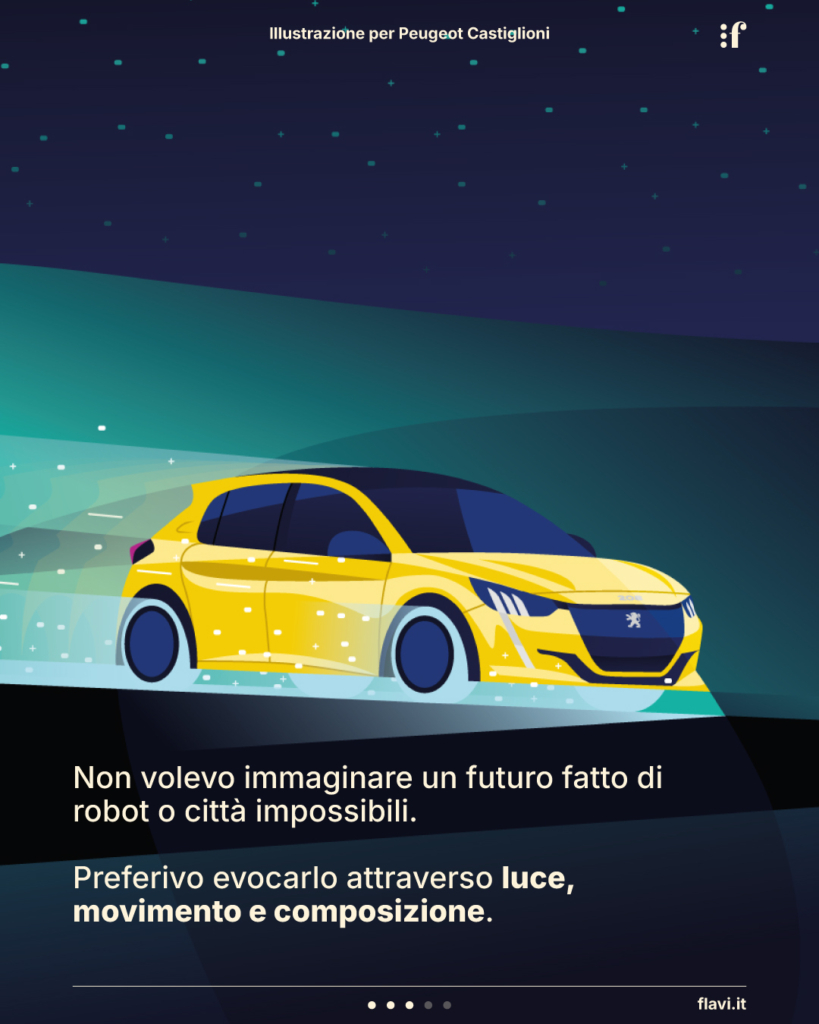
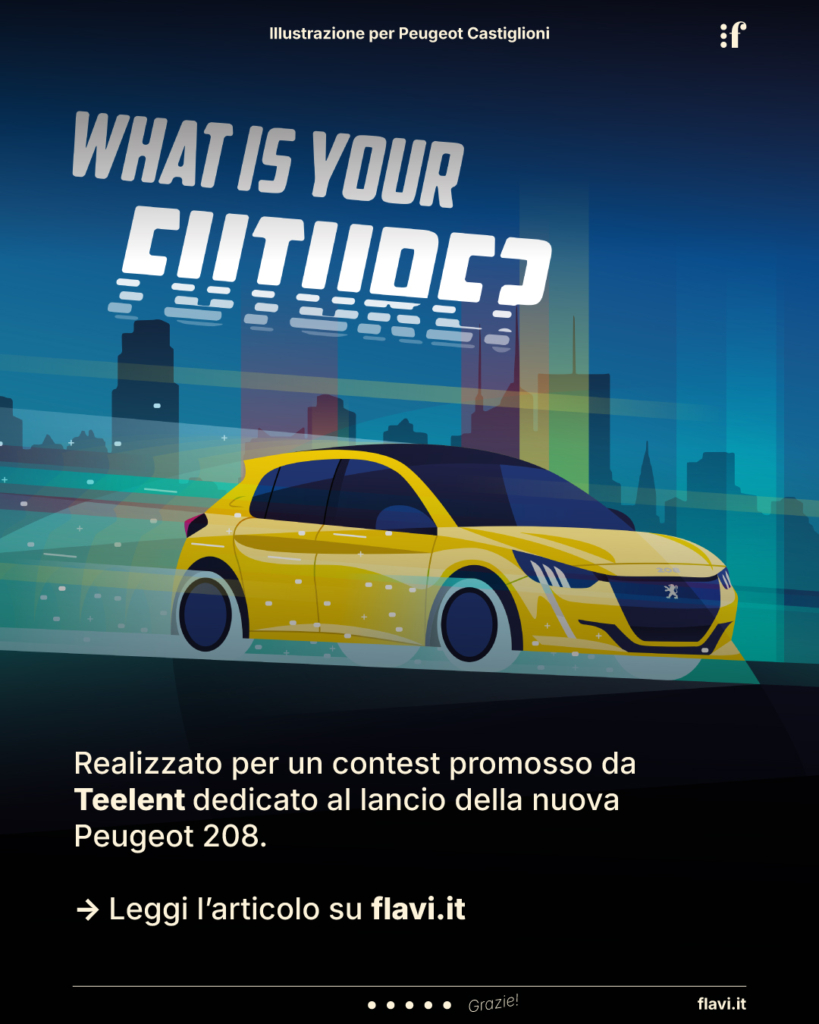
Per questo ho immaginato la 208 immersa in uno scenario urbano essenziale, attraversato da fasci di luce, scie luminose e volumi geometrici. Elementi che non vogliono rappresentare edifici reali, ma evocare energia, connessioni e movimento.
La vettura rimane il punto focale dell’illustrazione: il colore giallo emerge su una palette fredda di blu e ciano, mentre le linee prospettiche accompagnano lo sguardo verso il soggetto principale, mettendone in risalto le forme e il carattere.
Lo stile volutamente digitale e dinamico nasceva proprio con questo obiettivo: comunicare innovazione senza appoggiarsi agli stereotipi del “futuro”.
Un progetto che ricordo con piacere
L’illustrazione non venne selezionata dal contest.
Nonostante questo, a distanza di anni continua a essere uno dei lavori a cui sono più affezionato.
È stato un esercizio che mi ha costretto a interpretare un brief, sintetizzare un messaggio e tradurre alcuni concetti astratti, come futuro, tecnologia e design, in un’unica immagine.
Riguardandola oggi, credo sia ancora uno degli esercizi illustrativi e comunicativi più stimolanti che abbia realizzato.
In 2019, I created this illustration for a contest organized by Teelent on behalf of Peugeot Castiglioni in Varese.
Teelent is an Italian platform that connects companies with creative professionals through design competitions. Brands publish a brief, the community develops proposals, and a jury selects the strongest concepts. It’s an engaging way to work on real-world assignments and challenge yourself with genuine communication projects.
In this case, the brief accompanied the launch of the new Peugeot 208. Built around the claim “What Is Your Future?”, participants were invited to transform the car into a visual piece capable of communicating its design, technology, and vision of the future, with complete freedom in terms of artistic style and technique.
My interpretation
The question I asked myself was simple: What does the future look like?
I didn’t want to portray a science-fiction future filled with robots or impossible cities. Instead, I was interested in conveying a feeling rather than illustrating a specific vision of tomorrow.
With that in mind, I imagined the Peugeot 208 within a minimal urban environment, crossed by beams of light, luminous trails, and geometric forms. These elements aren’t meant to represent real buildings, but rather to evoke energy, connection, and movement.
The car remains the focal point of the illustration. Its yellow body stands out against a cool palette of blues and cyans, while the perspective lines naturally guide the viewer’s eye toward the vehicle, emphasizing its shape and character.
The deliberately digital and dynamic style was chosen with a clear purpose: to communicate innovation without relying on the usual visual clichés associated with “the future.”
A project I still enjoy looking back on
The illustration wasn’t selected in the contest.
Even so, years later it remains one of the projects I’m most attached to.
It challenged me to interpret a brief, distill a message, and translate abstract concepts such as the future, technology, and design into a single image.
Looking at it today, I still consider it one of the most rewarding illustration and visual communication exercises I’ve ever created.