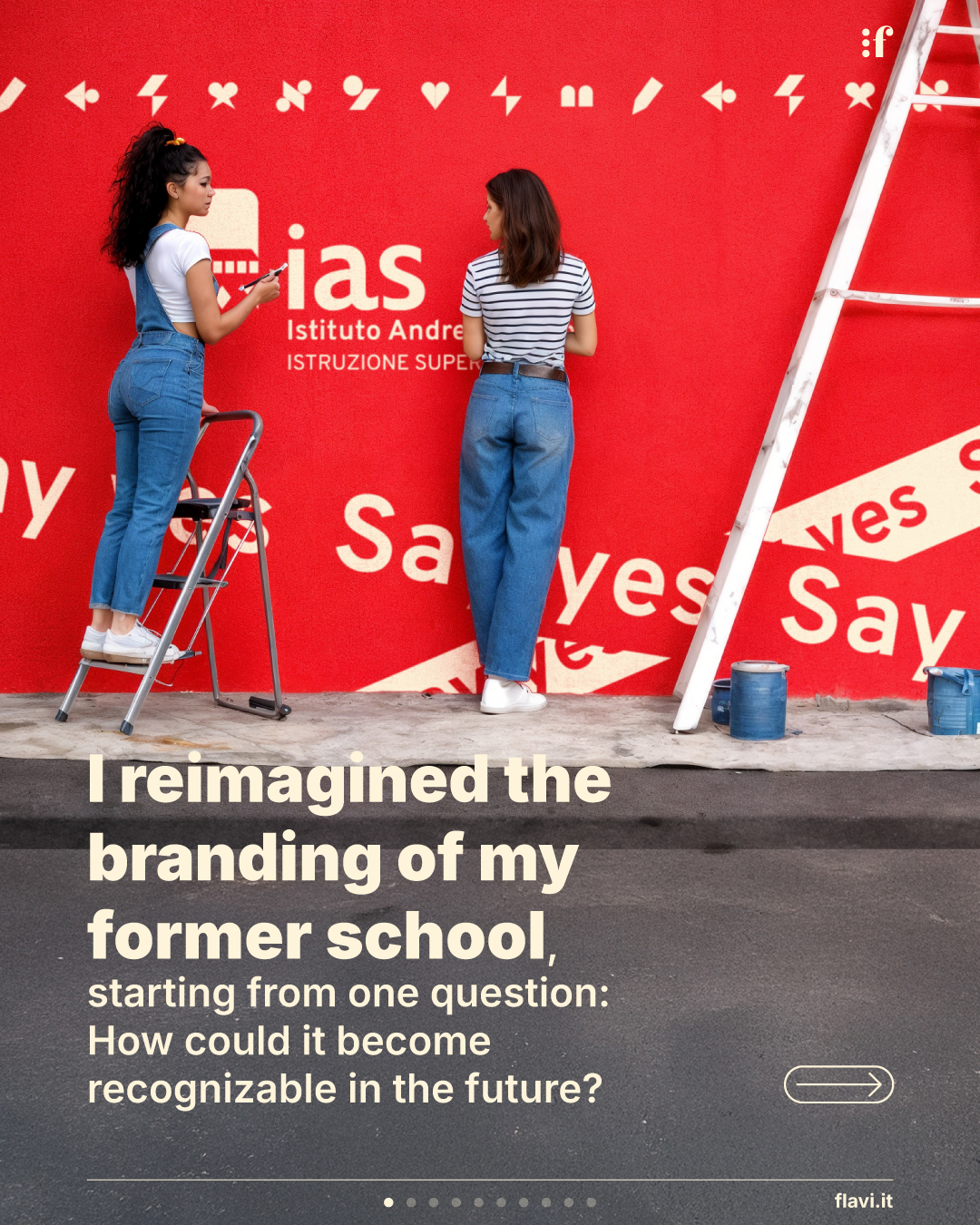
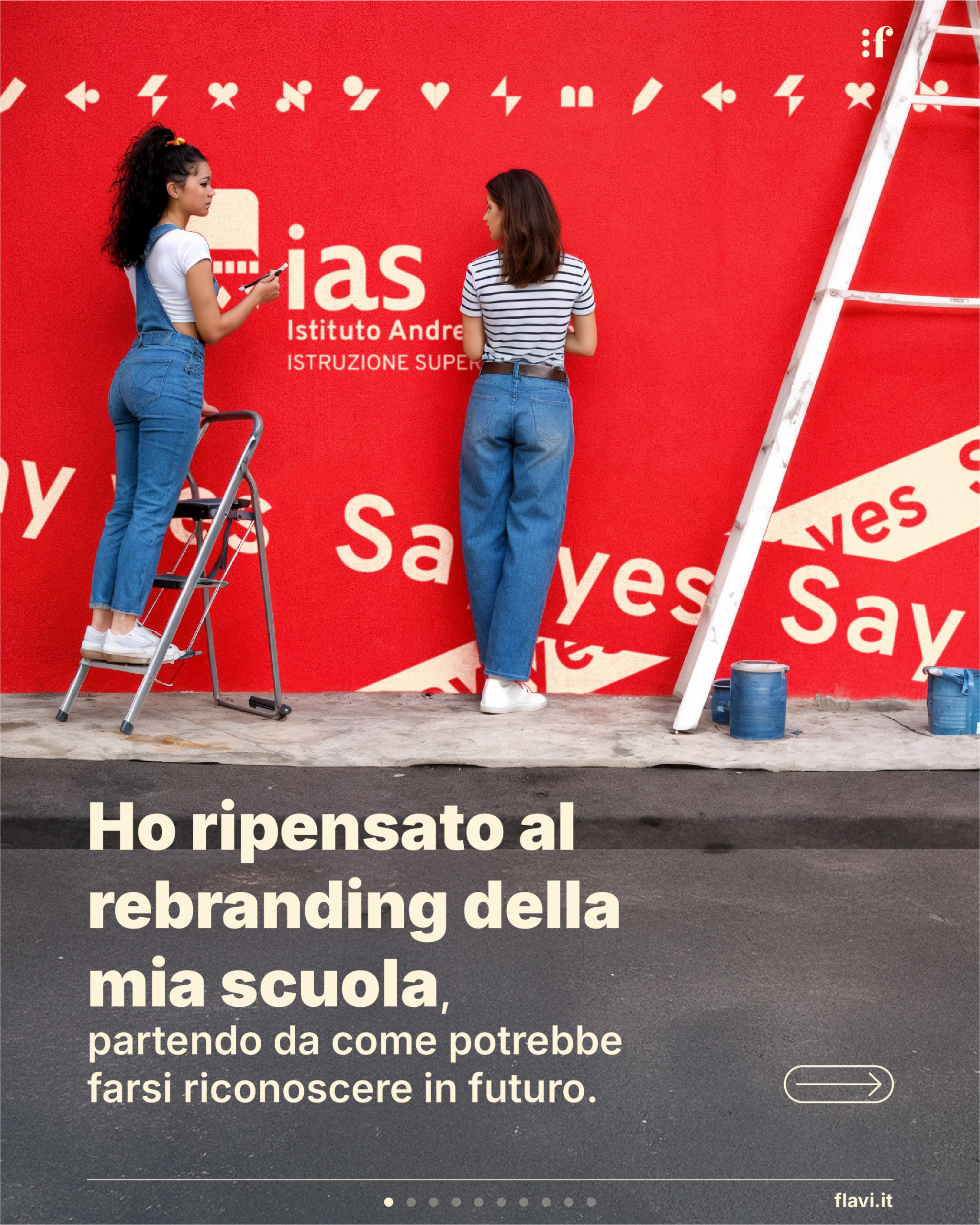
This project began with a simple observation:
I attended this school, and I realized that what happens inside its walls rarely reaches the outside world.
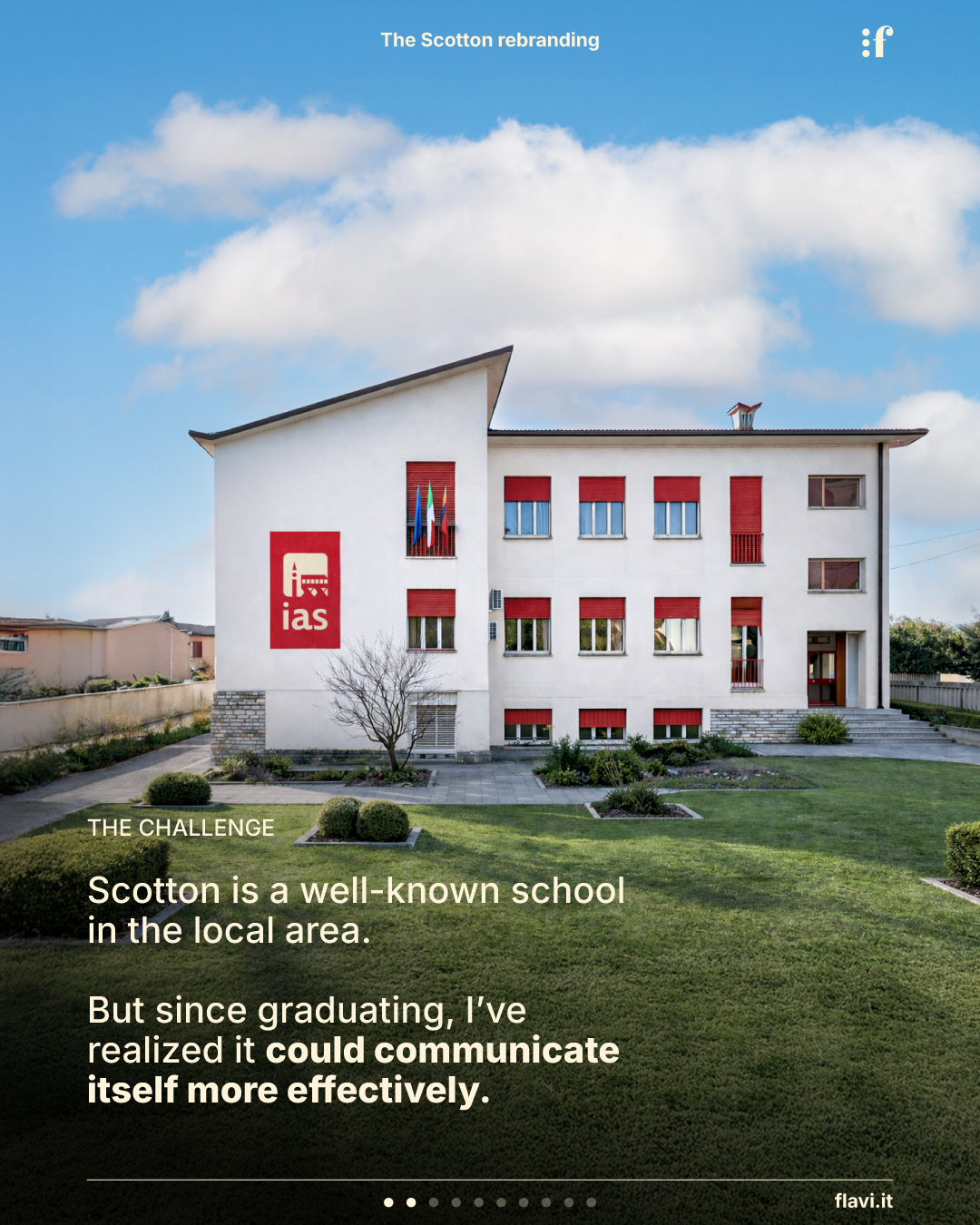
Scotton is a well-established school with strong ties to the local community, the workplace, and professional education.
Yet the way it presents itself doesn’t always communicate that.
That’s where this project began.
The challenge: when a school struggles to tell its own story
The issue isn’t the content.
The workshops are there. The skills are there. The experiences are there.
The problem is that much of this remains invisible to the outside world.
Very little reaches prospective students—or it does so in a fragmented and unclear way.
As a result, Scotton ends up being perceived as “just another school,” even though it isn’t.
This reflects a broader challenge in education today.
More and more schools are investing in their visual identity—not for aesthetic reasons, but to become more recognizable, more understandable, and easier to connect with.
The idea: can a school become instantly recognizable?
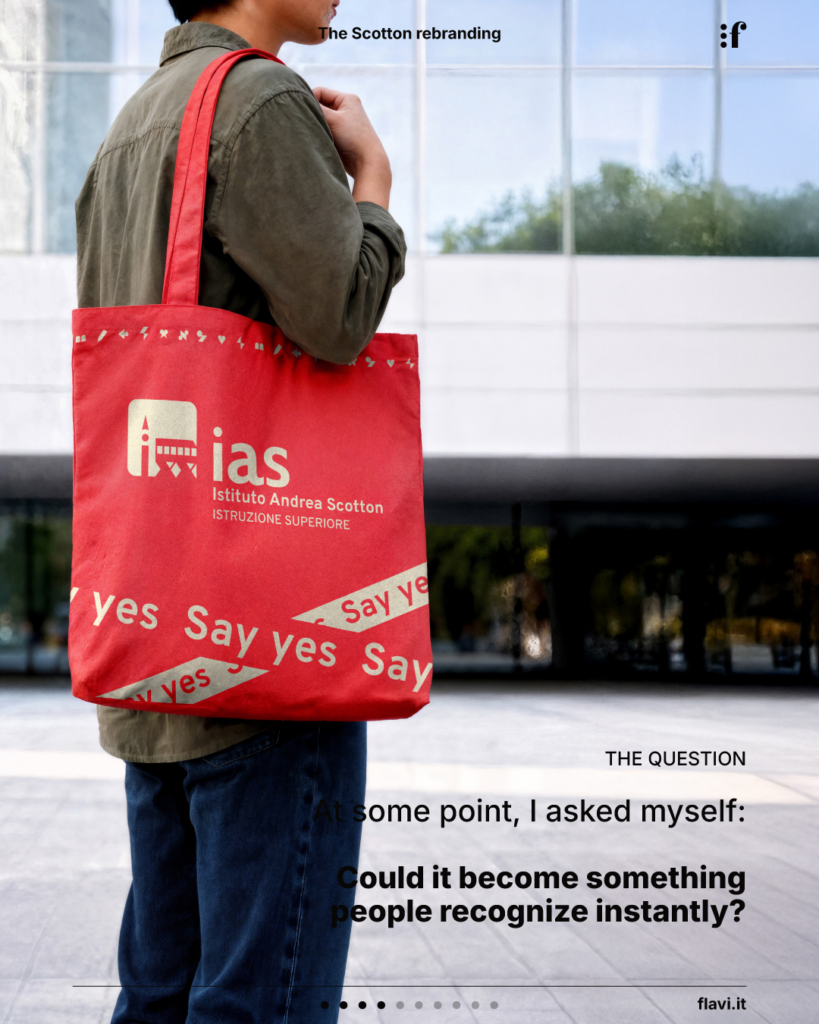
At one point, the question became surprisingly simple:
Can a school become something people recognize immediately?
Not just visually, but in the way it’s named, talked about, and remembered.
That’s where the idea of rethinking the school’s identity emerged—not as a purely aesthetic exercise, but as a way to improve communication.
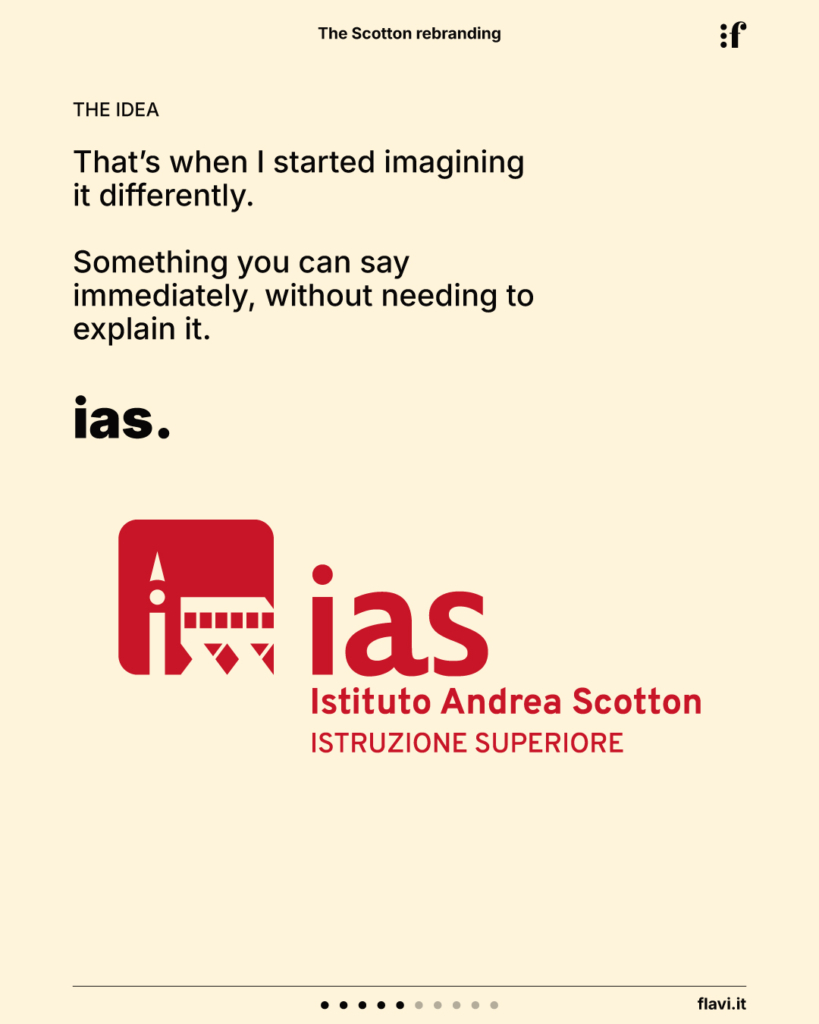
IAS: a more direct way to say “Scotton”
That’s how IAS came to life.
Not as a replacement for the Scotton name, but as an extension of it.
A shorter, more immediate way to refer to the school.
Something easier to say, easier to remember, and more natural in everyday conversation.
A name that doesn’t need to be explained every time.
Why it’s more than just a logo
The goal wasn’t simply to design a new symbol.
The real question was whether this identity could work in everyday life:
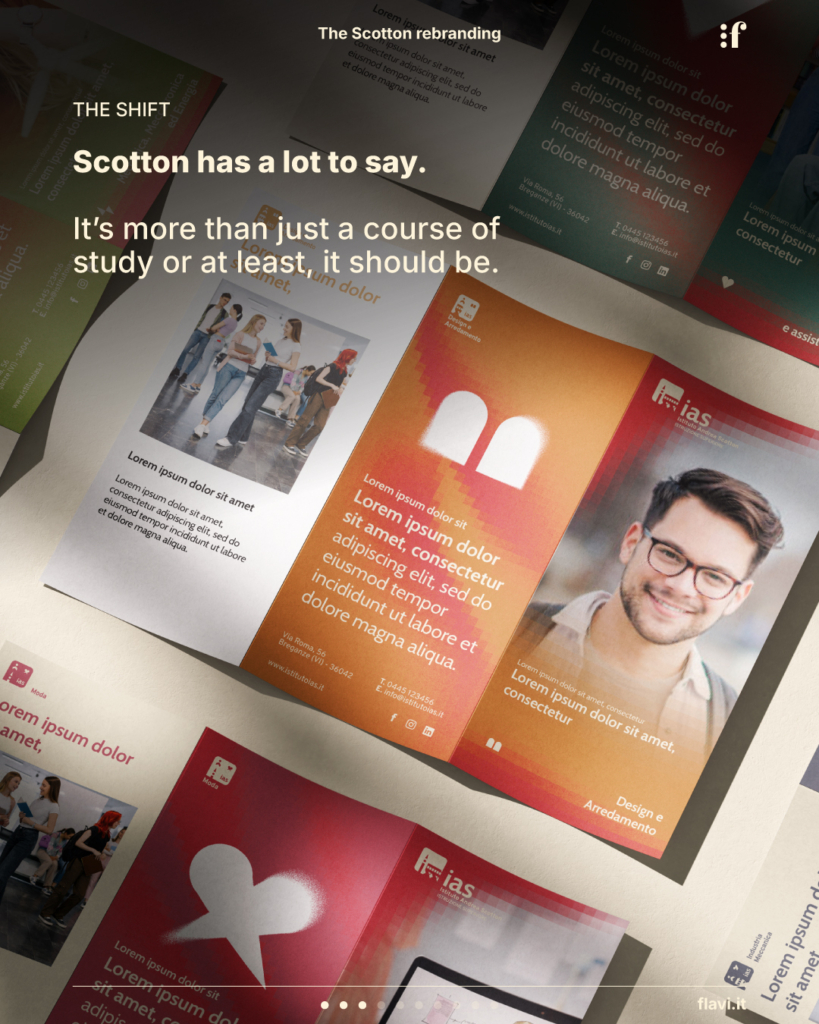
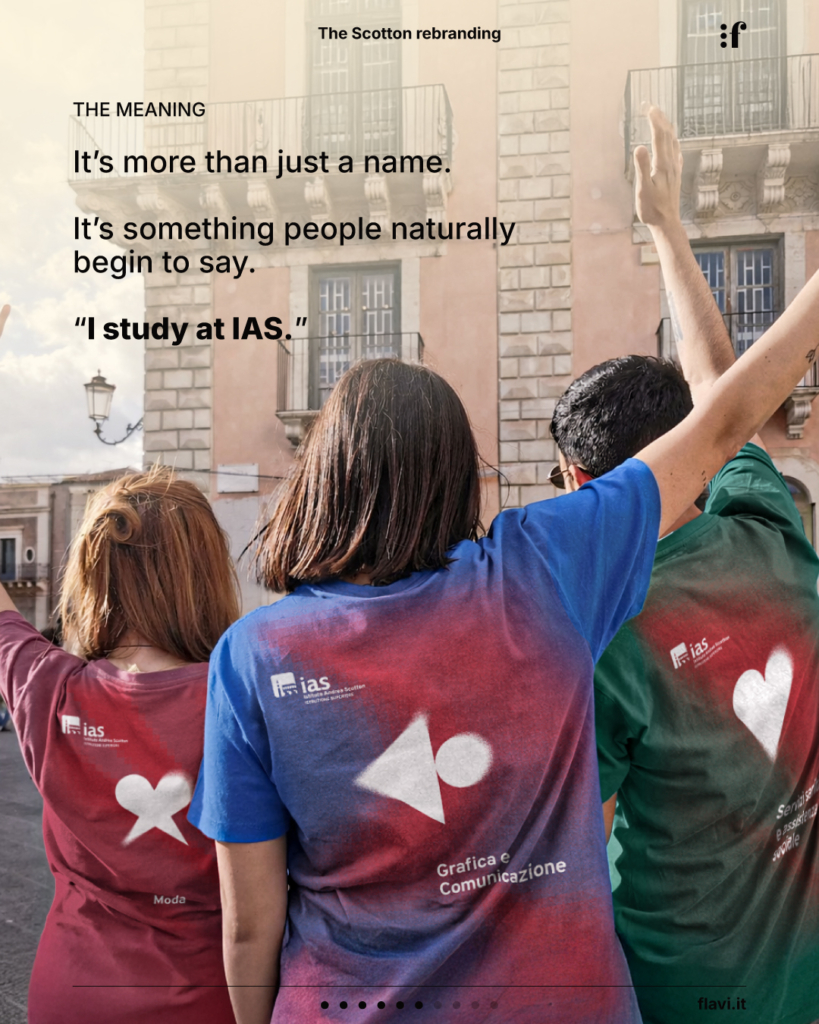
through the school’s corridors, across social media, in printed materials, and among the people who experience the school every day.
Could it become something people actually use, rather than simply see?
In that sense, a brand identity isn’t about decoration.
It’s about making an existing reality clearer and more recognizable.
A system designed to work everywhere
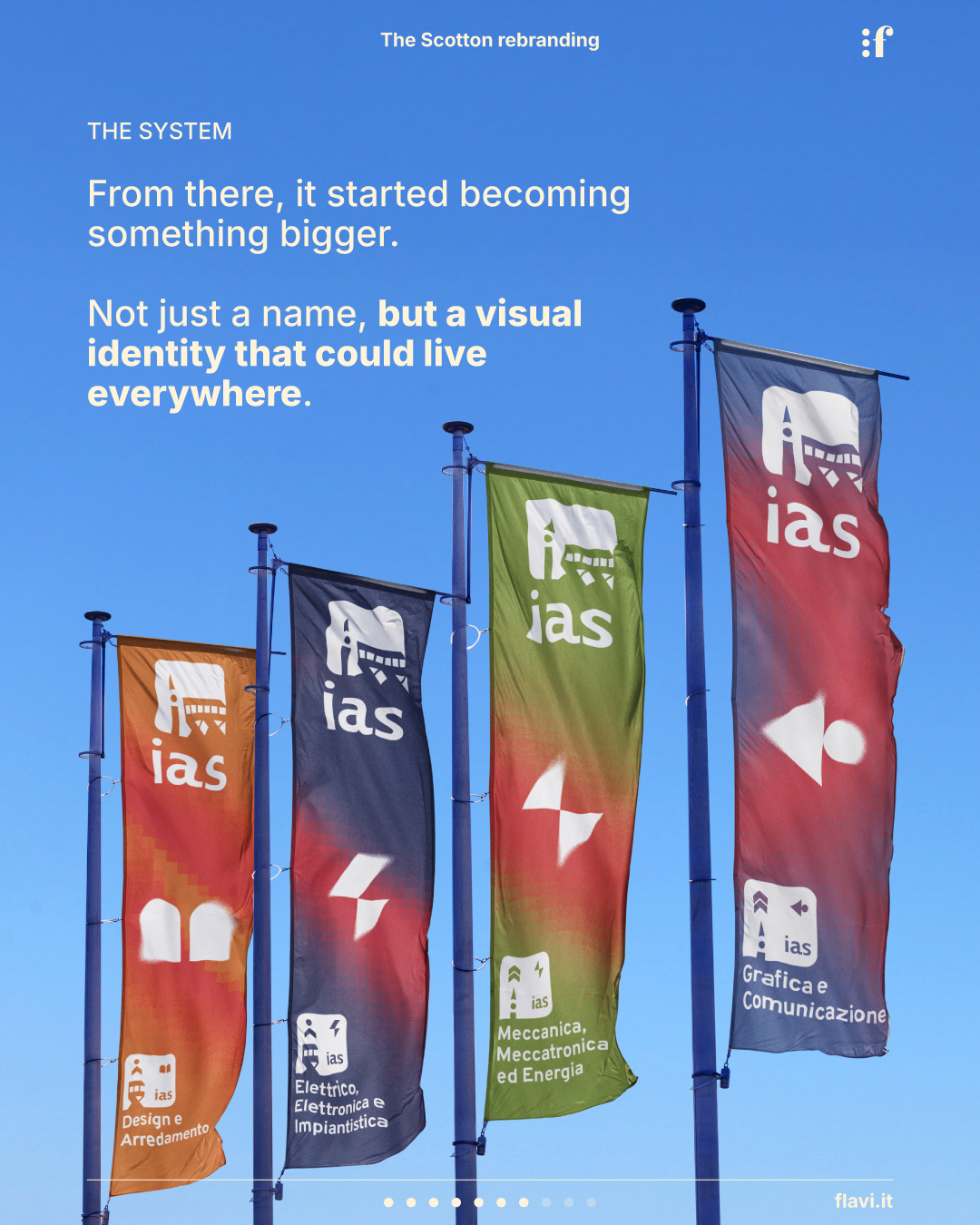
For that reason, the project goes far beyond the name itself.
It extends to signage, course identities, everyday communication, printed materials, digital channels, and the physical spaces of the school.
The objective is to build a coherent visual system that remains recognizable across different contexts without losing consistency.
A matter of people, not just communication
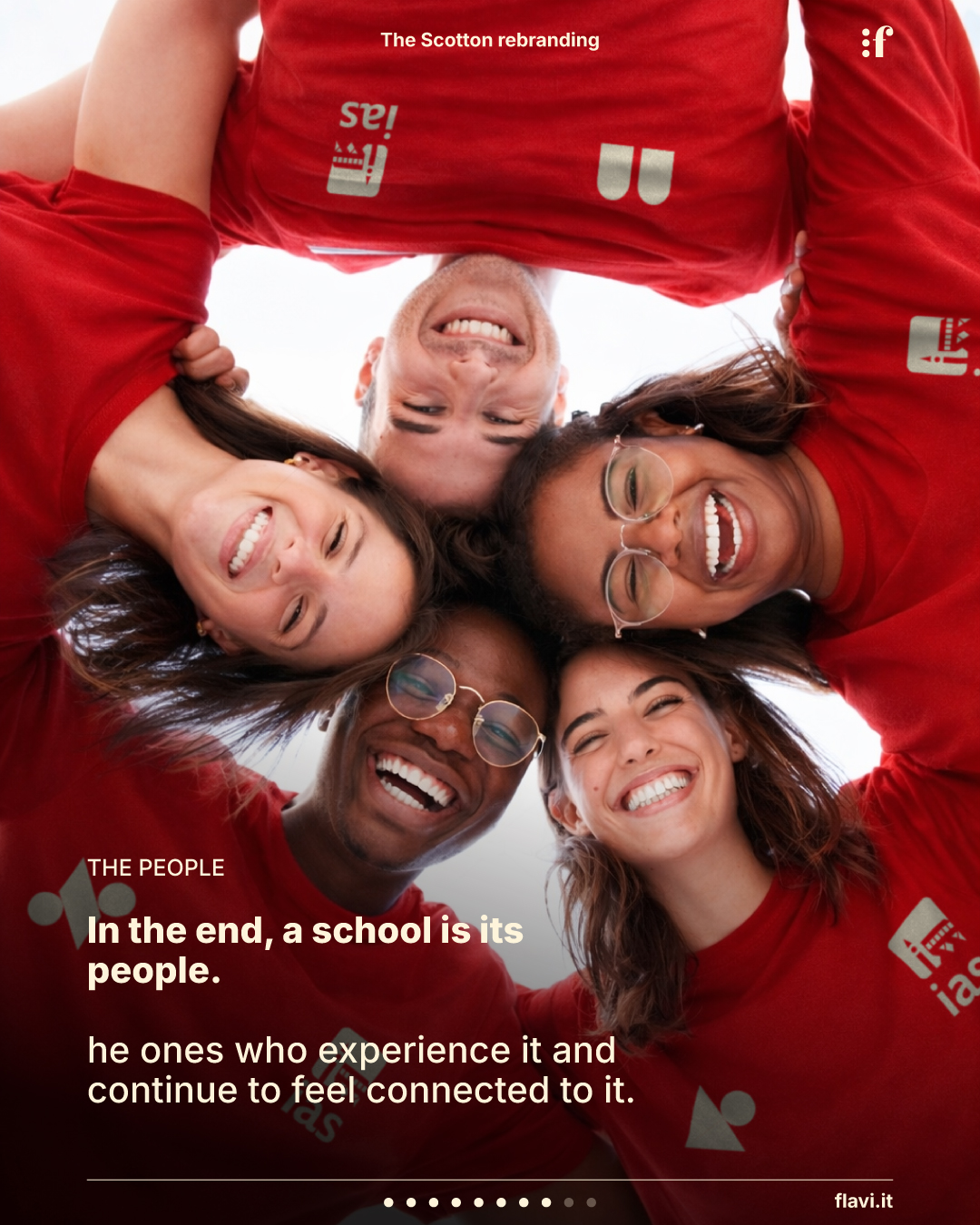
Ultimately, a school is defined by its people.
The students, teachers, and staff who experience it every day—and the alumni who continue to feel connected to it long after they’ve left.
A visual identity can help create exactly that:
continuity, a sense of belonging, and recognition.
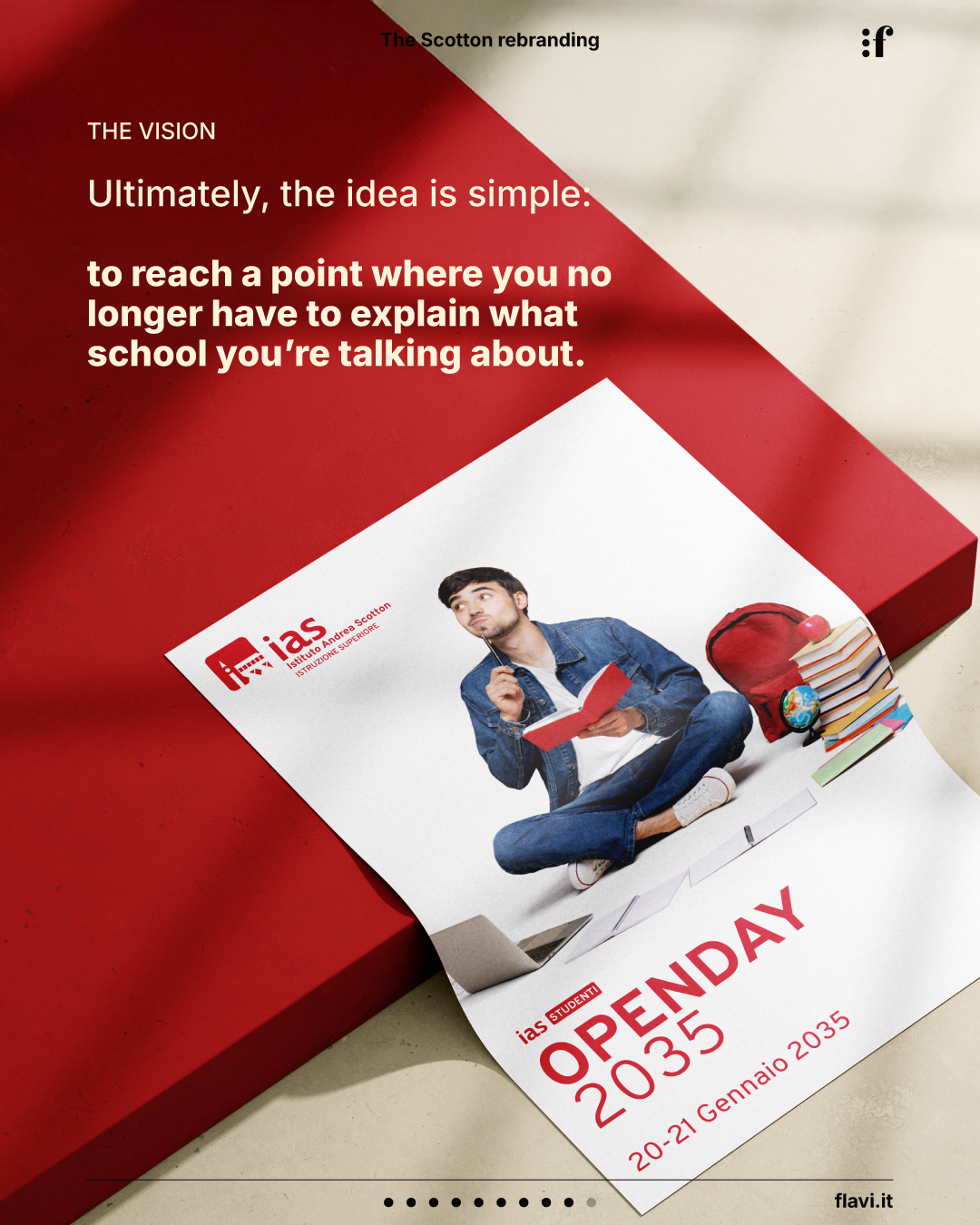
The vision
In the end, the idea is simple:
to reach a point where you no longer have to explain which school you’re talking about.
About this project
This is not an official project.
It is an independent branding exercise created to explore a possible evolution of Scotton’s visual identity and, more broadly, to reflect on how schools communicate today.
Further reading
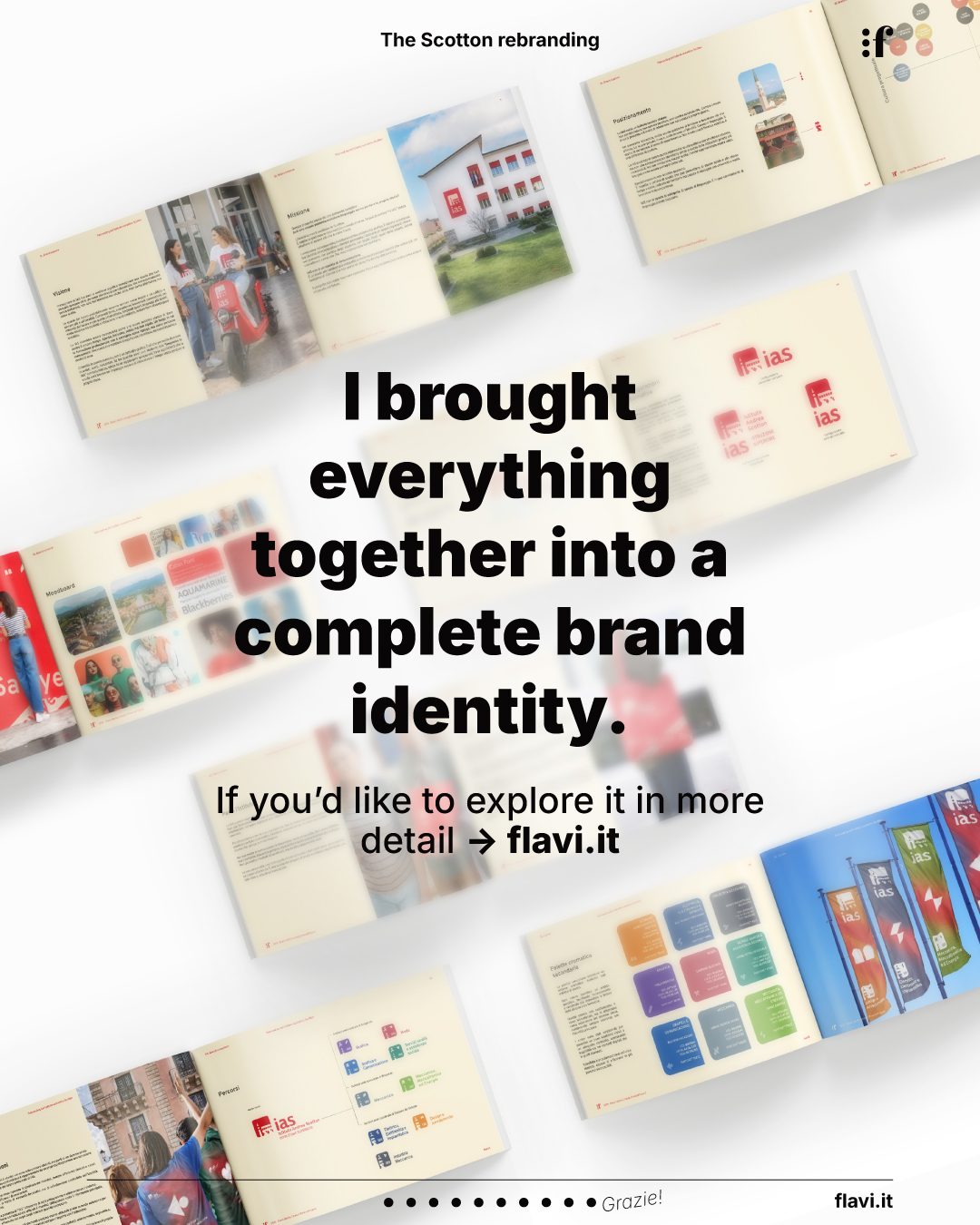
What you’ve seen above is only a summary.
Below, you can browse the complete brand manual, featuring the full identity system and all of its applications.