
What Followers Mean Today
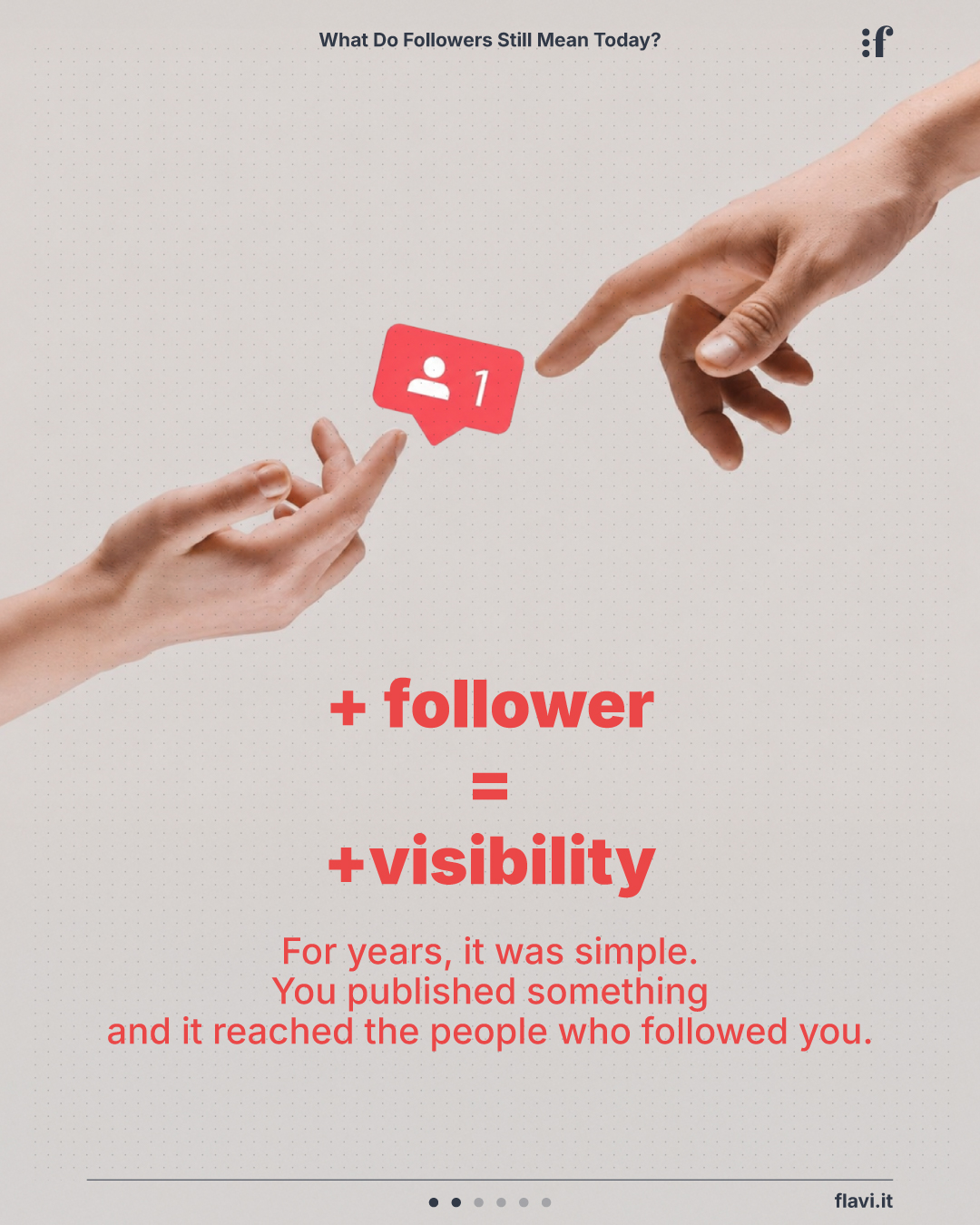
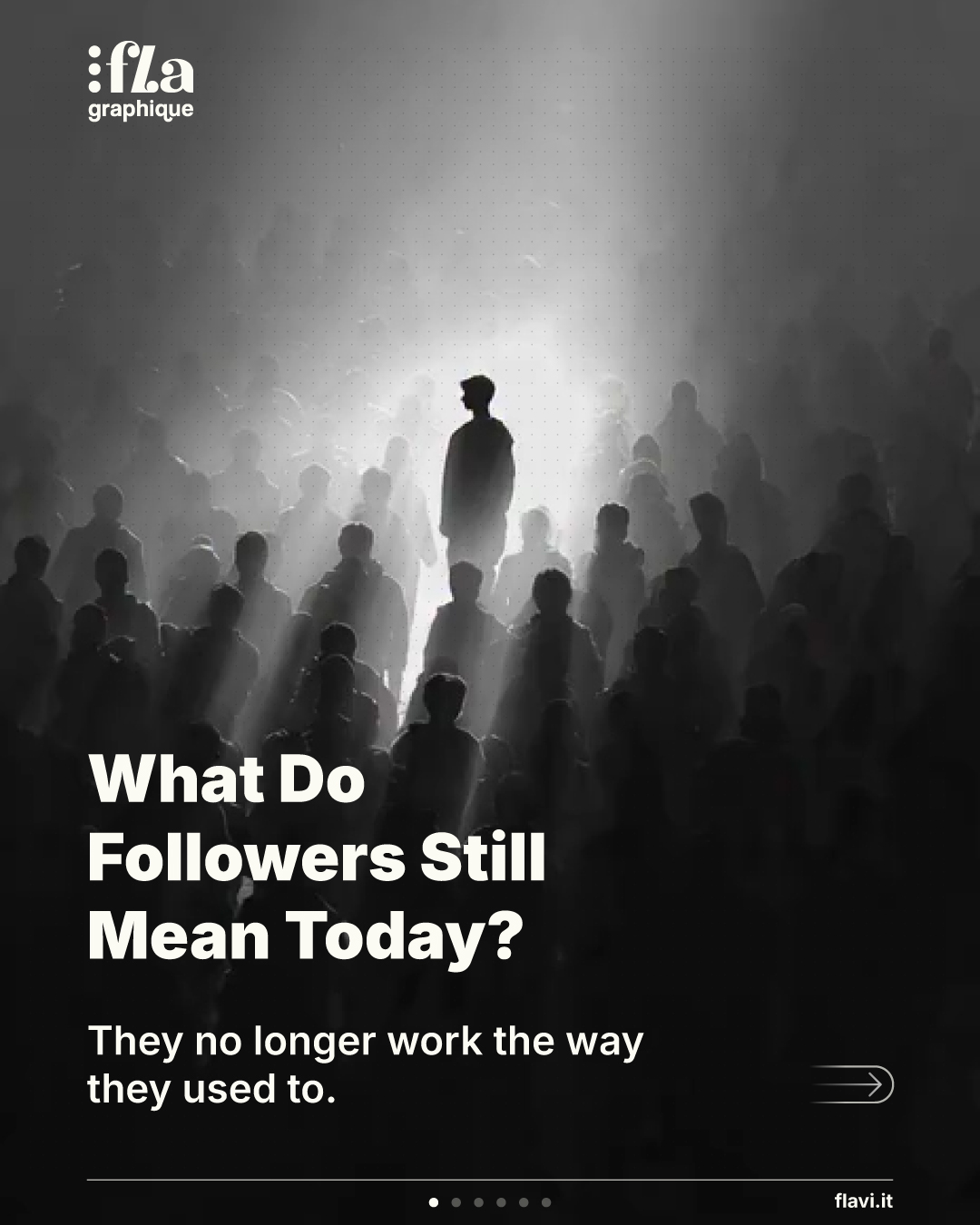
Since the early days of social media, followers have been the standard measure of online value.
Growth meant one thing: gaining more followers, reaching a wider audience, and building an ever-larger group of people to speak to. And for a long time, that’s genuinely how it worked. You published something and, more often than not, it reached the people who followed you.
It was a simple system, one that shaped the growth of social networks.
Then, gradually, something changed.
Today it’s common to see content from people we’ve never followed, while barely seeing posts from creators we’ve been following for years.
This isn’t just a feeling.
It’s how social platforms now operate.
The feed is no longer built around relationships or the people we’ve chosen to follow. Instead, it’s built around whatever is most likely to keep our attention at that moment.
Within this system, content reaches people who have never heard of the account that published it. A post can perform well without an established audience behind it. It can even generate significant reach starting from zero.
It’s easy to conclude that followers no longer matter.
They’re no longer the starting point.
They don’t guarantee visibility, and there’s no certainty that the people who follow you will actually see what you publish.
But that doesn’t mean they’ve become meaningless.
Their role has simply changed.
Followers are the people who come back. The ones who recognize your work. The ones who connect a piece of content to a person, a brand, or a project.
They’re also one of the few signals that something you’ve created has managed to last beyond a single moment.
That changes the way an online presence is built.
Every piece of content feels like starting from scratch.
You’re no longer speaking primarily to your followers. Every post enters a stream where it competes with everything else, regardless of who created it.
That dynamic can produce unexpected results, even without years of audience-building.
At the same time, it makes continuity much harder to achieve.
Visibility becomes less predictable and much harder to control.
It also changes the way you communicate.
You don’t necessarily stop developing your own voice, but there’s a growing temptation to shape it around what performs well within the algorithm rather than around the people who chose to follow you.
When followers are no longer at the center of the experience, the relationship between creator and audience is filtered through a system that decides what gets shown—and what doesn’t.
That’s not necessarily a bad thing.
But it’s a shift worth recognizing.
Social media doesn’t work the way it used to.
Followers are no longer the primary engine of growth, but they still represent something important: evidence that, over time, you’ve built something people chose to return to.
And in an environment where almost anything can go viral for a moment, understanding what lasts is probably more interesting than understanding what works.